

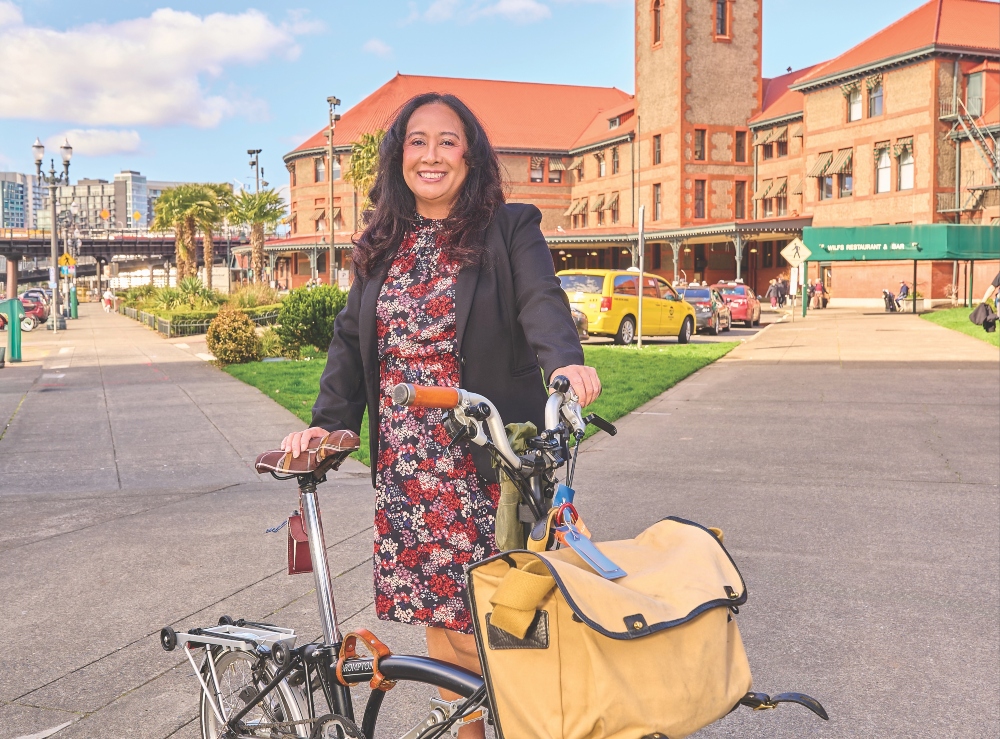
Following her 1995 graduation from Yale University in New Haven, Connecticut, with a bachelor’s degree in molecular biophysics and biochemistry, Emee Pumarega took a job as a research assistant in a microbiology lab at the University of Texas at Austin. However, her job in the biological sciences didn’t feel quite right to her. “Intuitively, I knew that a career at the lab bench was not for me, and I started working at the upscale Green Pastures Restaurant (now called Mattie’s) in Austin [in 1997],” says Pumarega. In 1999, she founded EJP Events with a focus on social gatherings, after being approached by two acquaintances to plan their weddings.
“After I worked in catering for a few years [at Mattie’s], I went on to work for Interstate Hotels & Resorts International [now Aimbridge Hospitality of Plano, Texas], which had a trio of Austin hotels with a group meetings focus,” Pumarega explains. She did all this while continuing to build EJP Events. When she made the decision in 2002 to move to Portland, Oregon, she brought EJP with her, and it’s now a full-service planning company with a convention and meetings focus, serving corporate, nonprofit, and association clients worldwide.
There are three pledges that anchor EJP Events’ planning philosophy: antiracism, sustainability, and social justice. “After the murder of Michael Brown in Ferguson, Missouri, in 2014, I did my best to educate myself on a lot of issues that, up to that point, I had been privileged to be shielded from,” Pumarega says. “I realized that there is a large swath of folks in this country who have a really different experience than I do, and that just moving about the world can be dangerous for them. I felt I could contribute, in a small way, to being part of the solution by making sure everyone knows my business is a safe, nondiscriminatory space. The pledges evolved over time, and a lot of the wording solidified in 2020 after the murder of George Floyd in Minneapolis.” This effort is reflected in the way EJP Events approaches safety and hospitality, ensuring all attendees feel secure and included.
“From there, it was intuitive that [pledges for] sustainability and social justice issues, such as accessibility, also are needed in order to have an event you can be proud of,” says Pumarega, noting she actively works with clients to reduce waste, select venues with
ingrained sustainability practices, and ensure elements like accessible transportation and translation needs are considered ahead of time. “When you have these practices at the front of your mind, you can see and plan an event in different ways, and [they] make your event better.”