
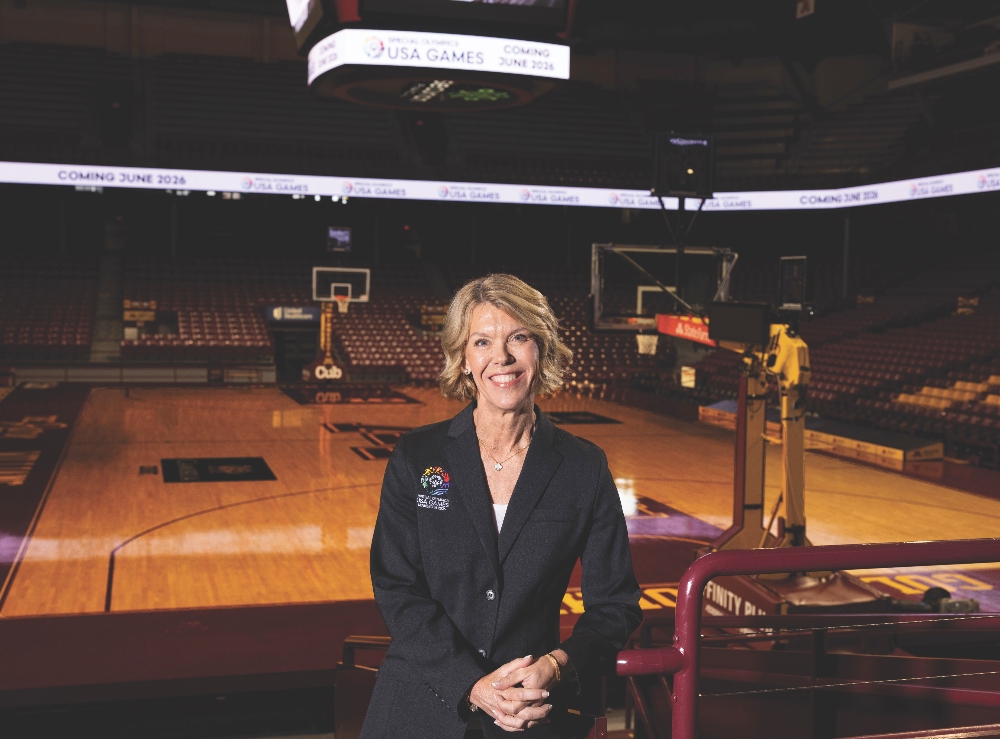
For more than 40 years, Christy Sovereign has been a part of the Special Olympics community—but her connection runs still deeper. “It’s a personal journey for me,” says Sovereign. “My sister, Katie, has been an athlete in the Special Olympics for over 40 years, and our entire family has been deeply involved as coaches, volunteers, and super fans.”
When the 2026 Special Olympics USA Games comes to Minneapolis–St. Paul, Minnesota, it will shine a light on the talents of athletes with intellectual disabilities, drawing participants from all 50 states, Canada, and the Caribbean to compete in 16 sports. And it’s not just about the games themselves—it’s also about a movement, one that highlights the importance of unified sports (which bring together athletes both with and without intellectual disabilities to compete) in schools, the need for better health and wellness access for all, and the push for more employment opportunities for neurodivergent individuals.
Q. Can you tell us more about what the games will entail?
A. There will be 16 Olympics-style sports competitions. Ten will take place at the University of Minnesota Twin Cities, and six will take place in Blaine, five of which will be held at the National Sports Center campus and one at another nearby facility. There will be 24 special events throughout the week. Key events include the opening and closing ceremonies and
various events honoring the legacy of Eunice Kennedy Shriver, the founder of the Special Olympics. Plus, a major sports competition will be held at Allianz Field in St. Paul, showcasing professional unified soccer teams. This event will highlight the caliber of unified
sports and put it at center stage.
How do you hope the Twin Cities community will engage with the games and contribute to their success?
I want the community to feel personally invested in the event. The single biggest way we will leave a lasting legacy is by engaging the community. Whether people attend the opening ceremonies or visit the fan zone, I believe they will be transformed by the experience. Seeing the athletes’ joy and athleticism, and witnessing how they overcome limitations, is life-changing. Our goal is to bring people together, not just as spectators but also as champions of inclusion, and I’m confident this will lead to greater involvement in the Special Olympics and a lasting effect on the [Twin Cities] community.
What impact do you hope the 2026 Special Olympics USA Games will leave on future generations?
The 2026 Special Olympics USA Games aim to create lasting change in health and wellness, youth inclusion, and employment opportunities for individuals with intellectual disabilities. The event will spotlight health disparities, promote inclusive education, and collaborate with corporate partners to create pathways to meaningful employment for athletes. Minnesota, already a leader in unified schools, will further the movement for inclusion and reduce stigma. Although the games are expected to have an economic impact of up to $100 million on the Twin Cities community, the true legacy lies in foster-
ing a culture of inclusivity, supporting healthy lifestyles, and opening doors for employment. Ultimately, we hope the games inspire long-term positive change that will benefit Minnesota’s communities for generations.