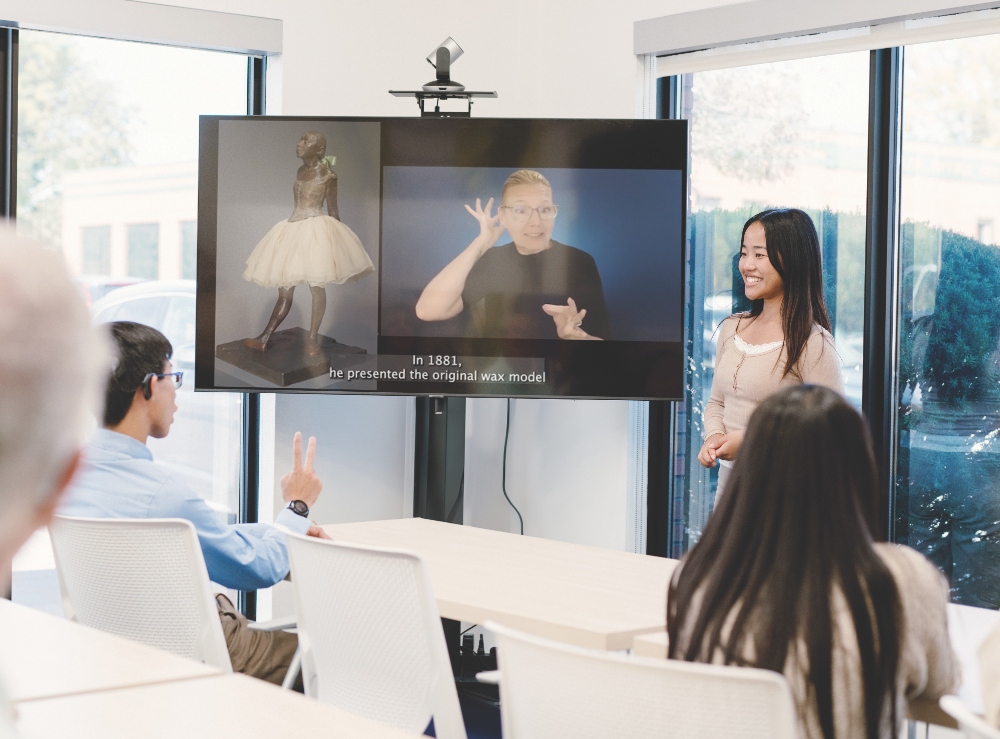
Planners know reach matters, and ensuring all attendees have equal access to content is a critical part of that. Language services, including interpretation (for spoken words), translation (for written words), closed captioning, and live captioning (also known as CART) can be important tools for including attendees who are deaf, hard of hearing, or have limited English proficiency. To accommodate all language and hearing abilities, planners must first understand what the needs are and how to plan for them.
Identify Attendee Needs: One of the easiest and most effective ways to evaluate language-service needs is by simply asking your audience on registration forms, of which you should consider creating multiple translations. A question like, “Do you require language or accessibility services?” can reveal lots of helpful attendee information early in the planning process, including interpretation, translation, or captioning requirements. Identifying common languages spoken in the host city and reviewing attendee demographics data from past events also can help you anticipate demand for language services.

Assess Application Methods: Once needs are identified, determine which event elements require language support. Common touch points include keynotes and breakout sessions, slide decks, signage, websites, mobile apps, welcome packets, and postevent materials, among others. Remember to give interpreters and live captioners relevant documents ahead of the event so they have time to familiarize themselves with any pertinent terminology. And don’t overlook logistics—for example, larger events might require headsets, audio channels, interpreter rotation schedules, or dedicated interpretation booths.
Enlist the Pros: For help finding a quality, accredited language services professional, the American Translators Association, based in Alexandria, Virginia, has a free Language Services Directory searchable by language and service type. Organizations like Chicago-based Interprenet also support in-person, remote, and hybrid events.

Helpful Tech: Zoom provides an interpretation feature for webinars and virtual meetings, and tools powered by artificial intelligence (AI) like Wordly aid in providing captioning and translation at scale. Keep in mind that while AI can be an easy-to-use, cost-effective tool, it is not always 100% accurate and often lacks the ability to identify nuance, idioms, or cultural references. Therefore, employing human professionals remains the gold standard.